
5 Surprising Ways Menopause Affects Brain Health — and What Women Can Do About It
A closer look at the surprising ways menopause can affect brain and body health — and the lifestyle habits that support healthy aging.

Hot flashes, mood changes, weight gain, and sleep disturbances — when it comes to menopause, the list of symptoms can seem endless.
As hormone levels shift, the effects of menopause can ripple throughout the body, influencing many of the systems connected to cognitive function and healthy aging.1

Menopause is not only a reproductive transition, but also a neurological and metabolic one.
No need to panic: Menopause does not directly cause neurodegeneration or metabolic disease. Rather, it can create a period of increased vulnerability, during which changes in the brain and body may make long-term cognitive health more sensitive to factors such as metabolism, cardiovascular health, sleep, stress, and mobility.
Menopause can bring important changes to the brain and body — but it can also be an opportunity to support long-term health more intentionally.
Understanding how this stage of life affects the body may give women more opportunities to proactively support long-term brain health and aging.
Here are five surprising ways menopause may affect brain and body health — plus what women can do to help support cognitive wellness and healthy aging throughout midlife and beyond.
1. Metabolism
Estrogen helps regulate how the body and brain use energy. During menopause, that process can become less efficient, which may help explain why many women notice changes in weight, blood sugar, cholesterol, and mental clarity around the same time.
Studies suggest menopause may also affect how efficiently the brain uses glucose, its primary fuel source. One study found that women going through menopause showed changes in brain energy metabolism associated with early Alzheimer’s-related patterns, indicating just how impactful these changes can be.2
These shifts can become even more relevant when combined with pre-existing metabolic issues like insulin resistance, high cholesterol, and abdominal weight gain — all of which become more common during menopause and are linked to increased risk of cognitive decline.1
Long-term research has also found that metabolic syndrome (learn about it in our article here) during midlife was associated with faster decline in processing speed and cognitive function in women over time.3
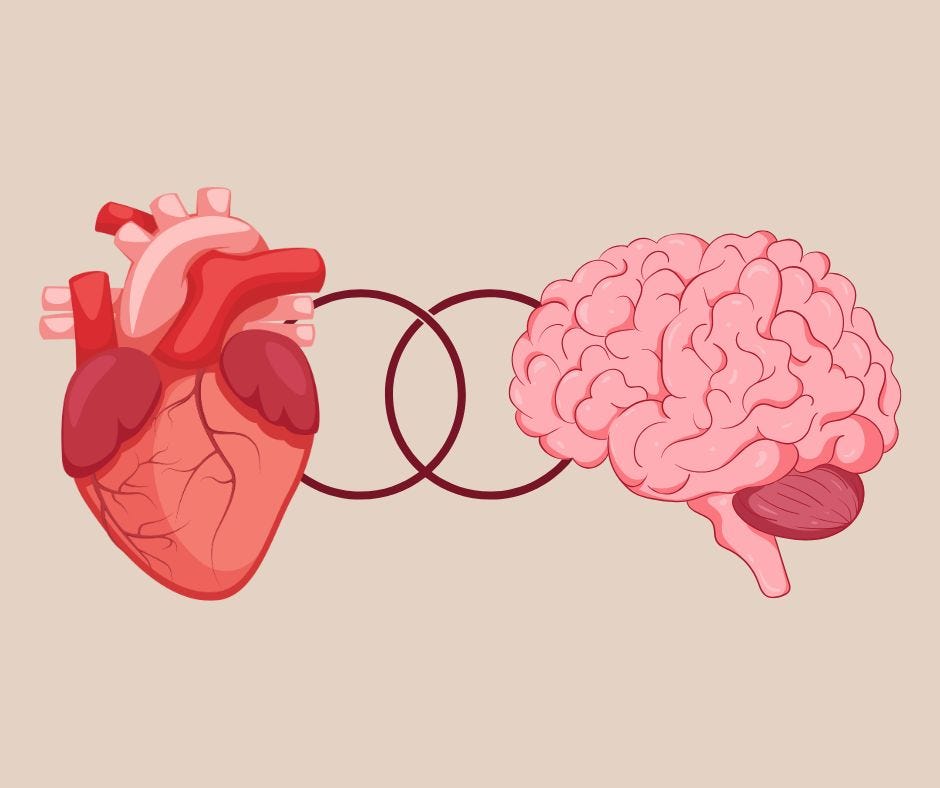
2. Cardiovascular Health
Menopause can quickly affect cardiovascular health in ways beyond normal aging.
As estrogen levels decline, women can experience rising LDL cholesterol, changes in blood vessel function, and increased blood pressure.4
These changes matter because the brain depends heavily on healthy blood flow. Reduced circulation and vascular damage can affect the delivery of oxygen and nutrients the brain needs to function well over time.
Recent research found that vascular risk factors had a stronger relationship with neurodegeneration in women who experienced earlier menopause, suggesting hormonal and cardiovascular changes may work together to increase susceptibility to cognitive impairment.5
As we age, cardiovascular and cognitive health become increasingly interconnected, suggesting that protecting one often benefits the other.
What supports the heart often supports the brain, too.
3. Sleep
Hot flashes, night sweats, and frequent nighttime awakenings are among the most common symptoms of menopause. But poor sleep during this transition may lead to more than just daytime fatigue.
One study found that menopausal sleep disruption worsened attention and reaction time, even when total sleep duration remained the same. In other words, interrupted sleep itself (i.e. sleep quality) appeared to affect cognitive performance.6
Sleep is also crucial to maintaining memory, mental clarity, and the brain’s natural detoxification processes. Increasing evidence suggests sleep disturbances may be one pathway linking menopause to long-term decline.7
Sleep is all-encompassing; because sleep affects so many systems throughout the body, ongoing sleep disruption can also influence mood, stress levels, metabolism, and overall quality of life during menopause.

4. Mood and Stress
Hormonal fluctuations during menopause are associated with increased risk of anxiety, depression, irritability, and chronic stress. While these symptoms are often discussed from a mental health perspective, they may also have important implications for overall cognitive health over time.
One recent study found menopause was associated not only with increased anxiety, depression, and sleep difficulties, but also with changes in brain regions involved in memory and emotional regulation.8
Other research suggests symptoms like depression, sleep disruption, and severe vasomotor symptoms during perimenopause may signal increased vulnerability to both depression and Alzheimer’s disease later in life.9
Beware of the vicious cycle: sleep and stress can also reinforce one another. Poor sleep may worsen mood and anxiety, while chronic stress can make restorative sleep more difficult — creating a cycle that may place additional strain on brain function over time.
5. Physical Strength and Stability
Menopause naturally accelerates the loss of muscle mass and bone density, which can affect strength, balance, mobility, and stability as women age.
But these physical changes may also be more closely connected to cognitive health than previously understood. Some evidence suggests the same hormonal changes that contribute to muscle loss may also affect memory, learning, and brain resilience over time.10
Research has also found that sarcopenia — the loss of muscle mass and strength as we age — was associated with significantly higher odds of cognitive impairment, with particularly strong associations observed in women.11
Bone health may also play a role. One recent review found that osteoporosis and cognitive impairment appeared to increase the risk of one another, further highlighting how interconnected brain and body health become during aging.12

Practical Ways to Support Brain Health During Menopause
These changes can sound overwhelming, but there is encouraging news: many of the systems affected by menopause respond well to lifestyle habits and preventive care.
Build Meals Around Brain-Healthy Nutrition
Nutrition is key to supporting metabolic, cardiovascular, and brain health during menopause.
Mediterranean and MIND-style eating patterns emphasize foods such as colorful vegetables, healthy fats (such as high-polyphenol extra virgin olive oil), fiber-rich carbohydrates, fish, legumes, and antioxidant-rich foods that support healthy aging.
Some research suggests long-term adherence to a Mediterranean diet may help improve cardiovascular risk factors, mood, vasomotor symptoms, bone health, and cognitive function in menopausal women.13
Fill Nutritional Gaps During Menopause
Eating a nutrient-dense diet should remain the foundation of healthy aging during menopause. But consistently meeting nutritional needs through food alone is not always realistic — especially during busy, stressful, or physically demanding phases of life.
Incorporating brain-supportive supplements, such as RELEVATE, can help fill those gaps and provide added support for metabolism, cardiovascular health, brain energy, and healthy aging.
Healthy aging isn’t built through one perfect habit — it’s shaped by consistent support over time.
Protect Sleep Quality
The brain works hard while you sleep, and that doesn’t change during menopause.
Common symptoms like night sweats and awakenings can disrupt sleep patterns, so it’s important to give your body the best chance at better sleep.
Maintaining a consistent sleep routine, avoiding late-night screen use, and supporting healthy stress management can improve sleep quality over time.
Prioritize Strength Training
Time to pump some iron!
Resistance and weight-bearing exercise help support muscle mass, bone density, balance, metabolic health, and long-term mobility. These forms of exercise may also help counter some of the natural physical changes that accelerate during menopause, including muscle loss, declining strength, and reduced stability.
In addition, regular movement supports cardiovascular function, mood, stress regulation, and cognitive resilience — all of which become increasingly interconnected throughout aging.
Certain nutrients may also help support energy production and healthy aging during menopause. Creatine, for example, has been associated with support for memory, processing speed, muscle strength, exercise recovery, and cognitive resilience — making it particularly relevant for midlife women.

Stay Proactive with Preventive Health
Menopause can affect blood pressure, cholesterol levels, blood sugar regulation, and body composition.
Regular checkups and health screenings may help identify changes early and create opportunities to support long-term health before problems progress.
To learn more about women’s midlife brain health, see our previous articles below:
Women’s Health and Cognitive Decline – Summing Up What You Need to Know
Barbie Boules on Women’s Midlife Brain Health: Key Risk Factors to Tackle
Menopause can bring significant changes, but it can also be an opportunity to become more intentional about long-term health.
When empowered with the right tools, many women emerge from this stage feeling stronger, more balanced, and more connected to their health than ever before.
This article is part of Brain Waves, our series exploring the powerful health habits that support cognitive resilience and healthy aging.
References:
Salamon, M. Beyond hot flashes. Harvard Health Publishing https://www.health.harvard.edu/womens-health/beyond-hot-flashes (2022).
Mosconi, L. et al. Menopause impacts human brain structure, connectivity, energy metabolism, and amyloid-beta deposition. Sci. Rep. 11, 10867 (2021).
Kazlauskaite, R. et al. Is Midlife Metabolic Syndrome Associated With Cognitive Function Change? The Study of Women’s Health Across the Nation. J. Clin. Endocrinol. Metab. 105, e1093-105 (2020).
El Khoudary, S. R. et al. Menopause Transition and Cardiovascular Disease Risk: Implications for Timing of Early Prevention: A Scientific Statement From the American Heart Association. Circulation 142, (2020).
Wood Alexander, M. et al. Associations Between Age at Menopause, Vascular Risk, and 3-Year Cognitive Change in the Canadian Longitudinal Study on Aging. Neurology 102, (2024).
Grant, L. K. et al. The effect of experimentally induced sleep fragmentation and estradiol suppression on neurobehavioral performance and subjective sleepiness in premenopausal women. Sleep 47, (2024).
Liao, H. et al. Association of earlier age at menopause with risk of incident dementia, brain structural indices and the potential mediators: a prospective community-based cohort study. EClinicalMedicine 60, 102033 (2023).
Zuhlsdorff, K. et al. Emotional and cognitive effects of menopause and hormone replacement therapy. Psychol. Med. 56, e24 (2026).
Barth, C., Crestol, A., de Lange, A.-M. G. & Galea, L. A. M. Sex steroids and the female brain across the lifespan: insights into risk of depression and Alzheimer’s disease. Lancet Diabetes Endocrinol. 11, 926–941 (2023).
Farhana, F., Sultana, M. A., Hia, R. A. & Hegde, V. Postmenopausal sarcopenia and Alzheimer’s disease: The interplay of mitochondria, insulin resistance, and myokines. Neurosci. Biobehav. Rev. 180, 106501 (2026).
Huang, J., Li, M., Luo, Q. & Li, J. The association of sarcopenia, possible sarcopenia and cognitive impairment: A systematic review and meta-analysis. PLoS One 20, e0324258 (2025).
Nasiri, H. et al. Bidirectional association between cognitive impairment and bone mineral density reduction in aging populations: A systematic review and meta-analysis of osteoporosis, osteopenia, and bone mineral content. Bone 200, 117616 (2025).
Cano, A. et al. The Mediterranean diet and menopausal health: An EMAS position statement. Maturitas 139, 90–97 (2020).